ABOUT ME
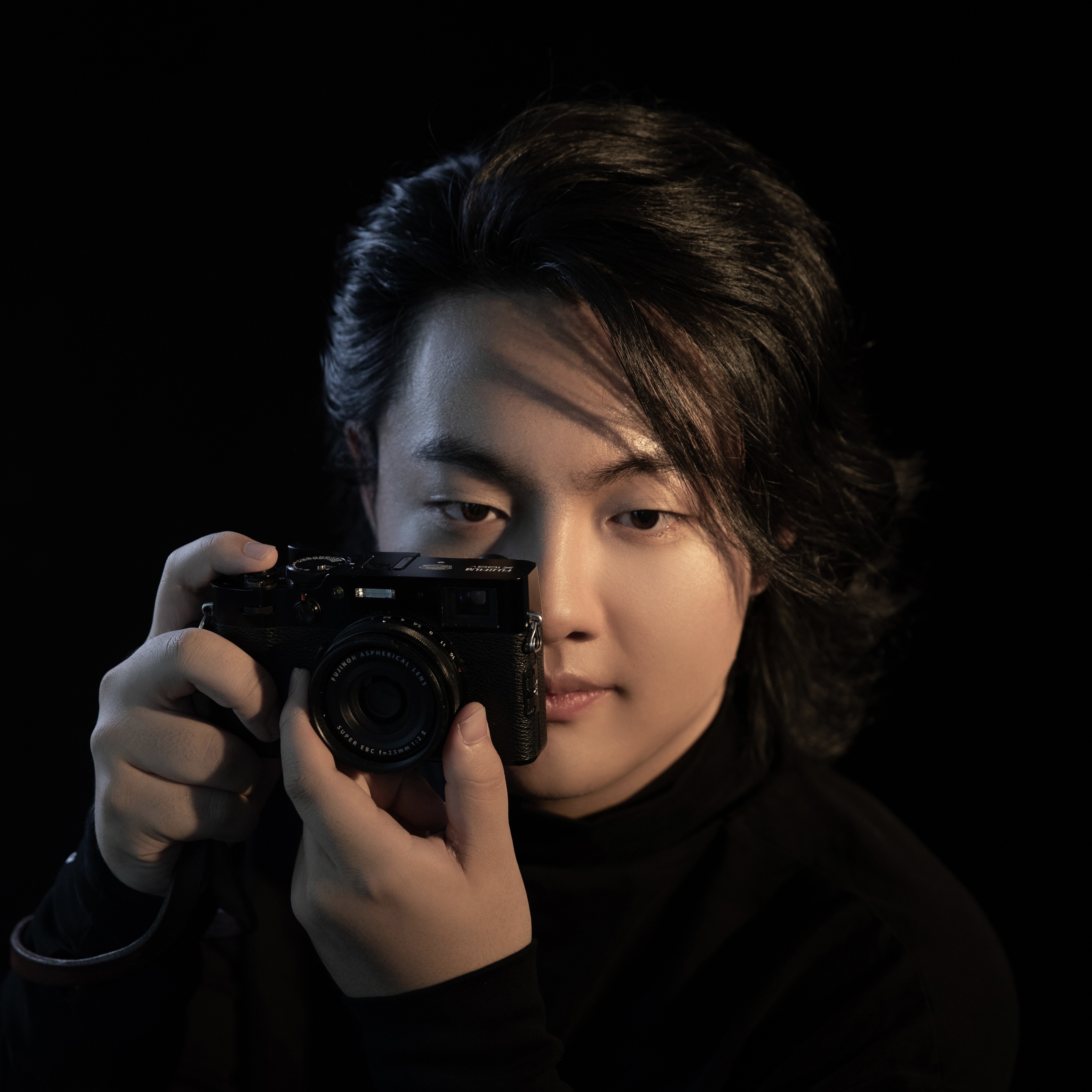
me
“If we cannot remember everything, we should at least know what we have forgotten.”
— Clive James, Cultural Amnesia
From the day I first picked up the first-generation Canon digital compact camera, the DIGITAL IXUS, at the age of five, I began to forge a profound bond with the art of photography. Guided by a child’s most instinctive visual curiosity toward the world, and by the almost magical revelation of every perspective, I pieced together the landscape of my own childhood life through the lens. Through those seemingly casual acts of photographing, I completed a transition from isolated objects to the semantic wholeness of a scene.
When my aesthetic consciousness began to awaken, I was no longer satisfied with merely reproducing and representing the world. I started to deliberately study photographic theory and skills, gradually forming a foundational understanding of visual creation through composition, light and shadow, and the logic of color. Meanwhile, through aerial perspectives, I attempted to expand the boundaries of visual expression, to awaken emotional resonance in the viewer, and to complete a qualitative transformation from spontaneous recording to aesthetic creation. Visuality became a mode of exploration: silent, yet full of implication.
My early practice focused primarily on landscape photography and documentary filmmaking. Yet in 2019, my work turned decisively toward humanist documentary photography. Since then, I have remained committed to a traditional documentary approach, while also experimenting with contemporary photography and more exploratory artistic forms. To understand the limitations of photography is just as important as understanding its potential. In search of a coherent humanistic mode of expression, I began to direct my lens toward the everyday lives and communities neglected by mainstream visual order. Using the image as a vessel, I try to recover the collective memory of an era, to explore individual aesthetic expression, and to understand how a shared public consciousness is transmitted. In this way, I gradually completed a thematic shift from landscape art to humanistic documentary. Within the frame, what is recorded is the way an individual comes to dwell in the world and engage in their surroundings.
Nowadays, across both still and moving images, I have continued to expand the boundaries of what may be understood as reality. In Simulacra and Simulation (1981), Jean Baudrillard argued that when people evade the roughness of the real and pursue a self-generated “hyperreality,” they become severed from reality itself. I have always believed that only by picking up the camera and recording those moments that are simplified or forgotten can one preserve truth and wholeness in an age of restlessness. This has been the ultimate conviction I have held onto throughout more than a decade of photographic practice.
My work has received international recognition, including 2nd Prize in the 2019–2020 UNESCO Youth Eyes on the Silk Roads International Photo Contest, as well as an Honorable Mention and an Official Selection in the 2023 International Photography Awards (IPA), among other distinctions. Beyond awards, what has remained especially meaningful to me is the recognition of those whose artistic judgment I deeply respect. My first mentor, Mr. Song Gangming, now in his seventies, described my work as “mature, distinctive, and passionate,” and remarked frankly that it felt “older than my age.” Magnum documentary photographer Eli Reed has described my work as “powerful” and “rare.”